Edward Wolfe (1897–1982) was a British painter associated with the Camden Town Group and the post-war modernist movement. Born in Johannesburg, South Africa, he moved to England during the First World War to study at the Slade School of Fine Art, where he developed a strong foundation in drawing and painting. Whilst at The Slade, Wolfe was invited by Nina Hamnett and Roger Fry to join the latter's Omega Workshops, a design enterprise founded by members of the Bloomsbury Group and established in July 1913 with the intention of providing graphic expression to the essence of the Bloomsbury ethos. Wolfe first exhibited with the Omega Workshops in 1918.
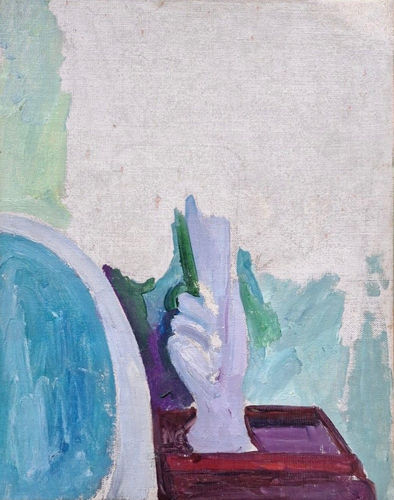
Wolfe’s work is characterized by bold colour, simplified forms, and a focus on everyday life, landscapes, and portraiture. Influenced by Post-Impressionism and the European avant-garde, he sought to combine expressive brushwork with a careful observation of form and structure.
He exhibited widely in Britain, including with the London Group, and was active as both a painter and educator. Today, Edward Wolfe is recognized as a significant figure in 20th-century British art, noted for his vivid use of colour and contribution to modernist painting in the UK.
